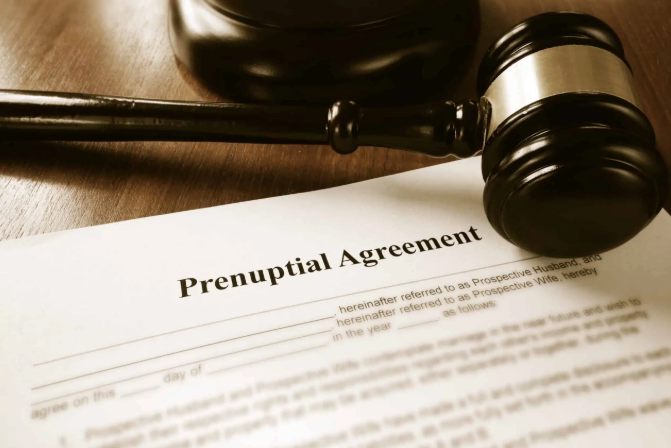
You might be staring at the word “prenup” and feeling a twist in your stomach. You are planning a wedding in Loudoun County, maybe thinking about venues, guest lists, and marriage licenses, and suddenly you are wondering if you should also be talking about a prenuptial agreement or exploring Loudoun Premarital Agreements. It can feel jarring. Romantic on one side, legal on the other.end
You might worry that bringing up a prenup will sound like you do not trust your partner, or that it will start an argument you are not sure how to handle. At the same time, a quiet voice in the back of your mind may be asking practical questions about money, property, or children from a prior relationship. Because of this tension, you might be stuck between wanting to protect your future and not wanting to hurt the person you love.
Here is the short version. A prenuptial agreement in Loudoun County is not just for the wealthy, and it is not a prediction of divorce. It is a planning tool that can bring clarity and reduce conflict if life takes an unexpected turn. The key is how you talk about it. With the right approach, the conversation can deepen trust instead of damaging it.


What does a Loudoun County prenuptial agreement actually do?
Before you can decide whether you need a prenuptial agreement in Loudoun County, it helps to understand what it really is under Virginia law. A prenup is a written contract you and your future spouse sign before marriage. It addresses how certain financial issues will be handled if you separate, divorce, or one of you passes away.
Virginia follows the Premarital Agreement Act, which sets the rules for when a prenup is valid and enforceable. That law allows you to cover things like property rights, division of assets and debts, spousal support, and some estate planning topics. It does not allow you to decide child custody or child support in advance. Courts will always look at what is best for the child at the time.
So where does that leave you? It means a premarital agreement in Virginia is less about controlling every possible outcome, and more about giving both of you a clear picture of how money and property will be handled, both during the marriage and if it ends.
See also: How One Crash Can Destroy a Lifetime of Work
Why does talking about a prenup feel so uncomfortable?
You might be thinking, “If I bring this up, my partner will think I am planning for divorce.” That fear is common, and it is understandable. You are getting married because you want a lifelong commitment, not because you are preparing for a breakup.
Yet, consider a few “what if” situations that many couples face.
What if one of you owns a home or a business before the marriage and wants to be clear about what happens to it if things change. What if you are entering the marriage with very different levels of debt, such as student loans or credit cards, and you do not want to end up responsible for something you did not create. What if you have children from a prior relationship and want to be certain their financial security is protected.
Without a written agreement, Virginia’s default rules decide how property and support are handled if you divorce. That might be fine for some couples. For others, those default rules do not reflect what feels fair or what you both intended.
The emotional challenge is that you are trying to talk about worst case scenarios at the same time you are planning your best day. That contrast can feel painful. Yet many couples find that once they move past the initial discomfort, the conversation about a prenup without location reference actually brings relief. You both know where you stand, and you are not guessing about each other’s expectations.
How does a prenuptial agreement compare to “no agreement at all”?
If you are unsure whether to pursue a prenup, it can help to compare what life looks like with one and without one. The goal is not to scare you, but to give you a clearer sense of the tradeoffs so you can make a thoughtful decision together.
| Issue | With a Prenuptial Agreement | Without a Prenuptial Agreement |
|---|---|---|
| Property you owned before marriage | Can clearly define what stays separate and how appreciation or income from that property is treated. | May be subject to arguments about whether it became marital property through use or contributions. |
| Debt brought into the marriage | Can spell out who is responsible for which debts, and how new debts will be handled. | Courts may treat some debts as marital, which can surprise the spouse who did not create them. |
| Spousal support (alimony) | Can be limited, waived, or structured in advance if done fairly and with full disclosure. | Decided by a judge based on Virginia law and your circumstances at the time of divorce. |
| Family business or professional practice | Can protect ownership, control, and valuation methods if the marriage ends. | Business may be partially treated as marital property, leading to complex and costly disputes. |
| Emotional stress in a breakup | Some decisions are already made, which can reduce conflict and legal costs. | More room for disagreement, longer negotiations, and higher financial and emotional strain. |
This comparison is not meant to say every couple must have a prenup. Many do fine without one. It is meant to highlight that choosing “no agreement” is still a choice. You are simply accepting the default rules instead of creating your own.
How do you actually start the prenup conversation with your partner?
This is where most people feel stuck. You may know that a prenuptial agreement in Loudoun County could be helpful, yet you are not sure how to bring it up without sounding cold or suspicious. The way you start the conversation matters just as much as the content of the agreement.
Instead of saying, “I need a prenup,” you might start with your feelings and your values. For example, “I have been thinking about how we handle money and protect each other. I want us both to feel safe and clear about our finances, no matter what life brings. Would you be open to talking about a written agreement that reflects what we both think is fair.”
Framing it as a shared plan rather than a demand can change the tone. It is also helpful to bring in the reality that marriage already involves legal steps. For instance, in Loudoun County you will need to apply for a marriage license through the clerk of the circuit court. You can read more about that process on the county’s page about marriage licenses in Loudoun County. A prenup is another legal step, but one you can shape together.
Give your partner time to react. They might feel surprised, hurt, or relieved. All of those reactions are normal. The goal is not to “win” the conversation. The goal is to understand each other and decide, as a team, whether a written agreement fits your shared values.
Three practical steps you can take right now
1. Get clear on your own reasons before you speak
Before you raise the topic, sit with your own motivations. Are you worried about a specific asset, like a home, a business, or an inheritance. Are you trying to protect children from a prior relationship. Or do you simply want clarity about how you will handle money as a couple. Write down your reasons in plain language. This makes it easier to explain that you are not trying to control your partner, but to protect both of you.
2. Have a calm, private conversation with no wedding planning pressure
Choose a time when you are not rushing to appointments or juggling seating charts. Tell your partner you want to talk about your long term future, including finances. Use “I” statements. For example, “I feel safer when expectations are clear” instead of “You might leave me and take everything.” If the conversation becomes tense, agree to pause and return to it. The point is to keep the discussion respectful and honest.
3. Talk to a family law professional before signing anything
Even if you both agree that a prenup is a good idea, the details matter. A poorly drafted agreement can be challenged later, especially if there was pressure, lack of disclosure, or terms that are extremely one sided. Speaking with an attorney who understands family law and Virginia’s Premarital Agreement Act can help you create an agreement that is clear, balanced, and more likely to be enforced if it is ever needed. Each of you should have a chance to review the document with your own legal advisor so you both feel informed and respected.
Moving forward with clarity and care
You are not wrong to be thinking about a prenup while planning a wedding. You are also not wrong if the idea makes you uncomfortable. Both can be true at the same time. What matters is that you and your partner talk openly, listen carefully, and make a decision that reflects your values, your history, and your hopes for the future.
A thoughtful marital agreement discussion does not predict failure. It can be a sign that you are willing to face hard topics together and protect each other through clear, honest planning. Whatever you choose, you deserve a marriage that starts with mutual respect, emotional safety, and a shared understanding of what you are building together.