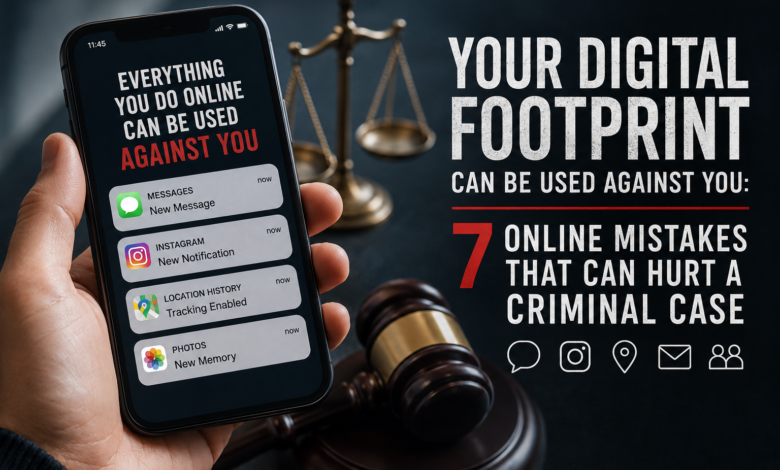
Most people understand that police can collect physical evidence such as fingerprints, surveillance footage, or witness statements during a criminal investigation. What many people fail to realize, however, is that some of the most damaging evidence in a criminal case may already be sitting in their pocket—or posted online for the world to see.
In today’s digital age, smartphones, social media accounts, text messages, and location tracking can all play a major role in criminal investigations. Whether someone is facing allegations involving DUI, domestic violence, theft, assault, or another criminal offense, online activity can quickly become evidence used in court.
Below are seven common digital mistakes that can unintentionally hurt a criminal case.


1. Posting About an Arrest on Social Media
One of the biggest mistakes people make after an arrest is turning to social media to tell their side of the story.
It may feel natural to post a status update explaining what happened, vent frustrations, or defend yourself against accusations. Unfortunately, prosecutors often review social media accounts during criminal investigations, and even seemingly innocent posts can be taken out of context.
For example, a post saying, “The cops totally overreacted” or “I barely touched him” may later be interpreted as an admission of involvement.
Even private accounts are not necessarily private. Screenshots, shared posts, and mutual connections can make information accessible in ways people do not expect.
The safest approach after an arrest is simple: do not discuss the case online.
2. Deleting Posts or Messages After an Incident
Many people assume the best move is to immediately delete social media posts, text messages, or photos connected to an incident. While that instinct may be understandable, deleting digital evidence can create additional problems.
In some situations, removing evidence after becoming aware of an investigation may be portrayed negatively or even raise accusations of attempting to destroy evidence.
Additionally, deleted content is often not truly gone. Investigators may obtain backups, cloud data, screenshots, or information directly from service providers.
Rather than trying to “clean up” digital activity, it is often wiser to speak with an attorney before making any decisions that could affect a case.
3. Assuming Text Messages Cannot Be Used in Court
Many people casually say things in texts they would never say out loud in front of a judge or jury.
Unfortunately, sarcasm, jokes, exaggerations, or emotional statements can look very different when isolated on paper.
For example, a message saying, “I’m going to kill him,” sent jokingly after an argument, could be viewed very differently in the context of an assault or domestic violence investigation.
Likewise, angry messages, threats, admissions, or apologies may later be introduced as evidence—even when they were never intended to mean what prosecutors claim.
Text conversations rarely tell the entire story, yet they can carry enormous weight in criminal proceedings.
4. Forgetting That Your Phone Tracks More Than You Think
Most smartphones constantly generate digital data.
Location history, GPS records, fitness trackers, rideshare apps, maps, and even photos often contain timestamps and location metadata. This information may be used to establish where someone was at a particular time.
In some criminal investigations, prosecutors attempt to use phone records to place someone near the alleged scene of an offense. In other cases, digital records may actually help support an alibi.
The key point is this: your phone may know more about your movements than you realize.
5. Posting Party Photos After a DUI Arrest
Social media activity can be especially problematic in DUI cases.
Imagine someone arrested for DUI on Friday night who spends the weekend posting pictures at bars, clubs, or parties. Even if those photos are unrelated to the arrest, they may create an impression that hurts the person’s credibility or undermines arguments being made in court.
Photos involving alcohol consumption, jokes about drinking, or posts minimizing the seriousness of an arrest may later become problematic.
Context matters, but perception often matters too.
6. Talking About the Case in Group Chats
Many people assume conversations with friends or family are private. However, group texts, messaging apps, and private chats are often less secure than people think.
Messages can be screenshotted, forwarded, or voluntarily shared with law enforcement.
A friend who seems supportive today may later become a witness. An ex-partner or acquaintance may provide screenshots to investigators. Even messages intended to coordinate stories or discuss witnesses can become serious issues in a case.
If criminal charges are involved, discussing facts of the case through digital messaging is generally risky.
7. Searching the Internet for “How to Beat My Case”
Internet searches can sometimes create unintended complications.
People facing criminal accusations frequently search things like:
- “How to beat a DUI”
- “How to delete evidence from my phone”
- “Can police recover deleted texts?”
- “How to avoid jail”
While searching for legal information is understandable, certain online activity can later appear suspicious if interpreted in the wrong context.
The better approach is to seek legal advice tailored to the specific facts of the situation rather than relying on internet forums or social media speculation.
Final Thoughts
Digital evidence plays a larger role in criminal investigations than ever before. Social media posts, phone data, text messages, and online activity can all influence how a criminal case develops.
The reality is that what seems harmless in the moment can later be misunderstood, mischaracterized, or used in unexpected ways.
When criminal allegations arise, protecting yourself often means being careful not only about what you say—but also what you post, text, search, or share online.
Sometimes the smartest move is not saying anything online at all.